
If you own a vehicle you need to know how to a change the tire. I’m certain you’ve seen someone on the side of the road with a flat tire waiting on someone to come and help them. There is nothing wrong with getting help from someone! However, learning how to change a tire can ultimately save you time and money. Flat tires can happen to anyone, therefore, everyone needs to be prepared when the situation arises!
When I was in college I went to a water park with some great friends and my brother. After spending all day at the park we discovered my friend’s car had a flat tire. He didn’t know how to change out the tire and in fact only one of us actually knew how. Thankfully another friend had been in a similar situation the week prior, so she was prepared. This saved us from having to call a tow truck, saving us time and money. But after that, my parents made sure we knew exactly what we would need to do in that situation going forward.
Watch My How to Change a Tire Tutorial Video
Low Tire Pressure
Usually when you have a tire with low tire pressure a light on your dash will light up and indicate one or more of your tires are low. This system is the tire pressure monitoring system (TPMS). If the light is on it means you have a tire with low tire pressure. As long as your tire is not flat, seek a place to get air put in your low tire. Upon filling your tire back to the proper pressure monitor for further changes in tire pressure. If your tire continues to lose pressure even after you have filled it, seek a tire repair shop immediately. Driving around on a tire that has low pressure can damage the tire beyond repair and damage the wheel.
If the TPMS light stays on even after the tire is inflated to the proper pressure, then the TPMS may be faulty, seek help from a trusted mechanic. Also, do not purely rely on your TPMS to alert you if your tire pressure is low. If the TPMS is faulty it may not tell you that your tire pressure is low. Always practice visually assessing and using a tire pressure gauge regularly, that way if your TPMS is faulty you can still catch any problems with your tires. Regularly monitoring your tire pressure can save you a costly tow bill.
What is needed
Most vehicles will come with the necessary tools to change out a tire. These items include a jack, a lug nut wrench, a spare tire, and, if necessary, a lug nut locker key. You should always know where these items are located in your car at all times, because you never know when they will be needed. Usually you can reference your owner’s manual to find out where your spare tire and the tire changing tools are located. If you don’t have the owner’s manual you can also ask the dealership, designated vehicle servicer or search the internet for this information as well.
If you own a newer vehicle, be advised that your vehicle may or may not have come with a spare tire. It is becoming more and more common to no longer include a spare tire with the purchase of a vehicle. In its place a fix-a-flat system is being included instead, which can be useful, but not in every situation. If you have a tire blow out, the fix-a-flat won’t be able to help you like a spare tire would. I personally would look into purchasing a spare tire for your vehicle as a precaution to avoid a tow.

Your Car Jack
Most vehicles are sold with what is called a scissor jack. Scissor jacks can be rather compact and lightweight and they operate by a hand crank system. These types of jacks are easy to use and are intended for use in the event of an emergency. They are not designed for long term use, only temporary use to get a tire off and on a vehicle.
You need a lug nut wrench
Usually the lug nut wrench is stored with your car jack and the spare tire. The lug nut wrench will help you remove the lug nuts in order to get your tire off. The lug nut wrench comes in several different forms. My lug nut wrench is an “L” shape, but some are in the shape of “+”. It does not matter the shape of your lug nut wrench as its purpose will not change.
Lug nut key
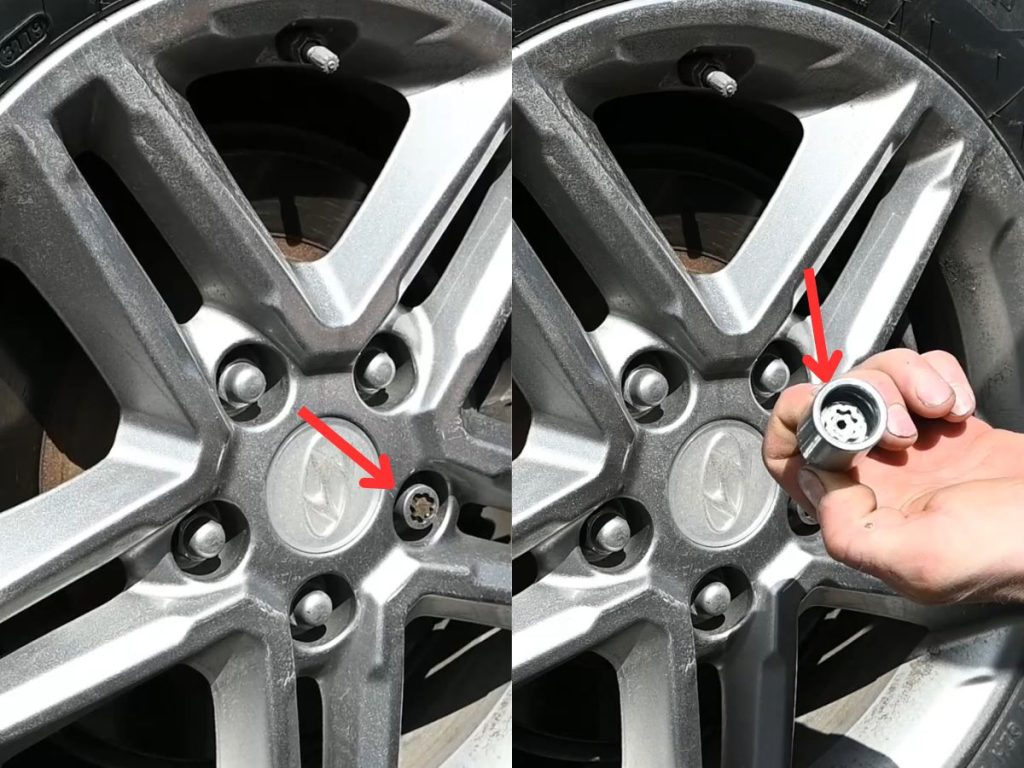
Many vehicles nowadays have a lug nut locker key with a special pattern that matches a special lug nut you have securing your tire now. There is usually a single special lug nut on each wheel, this helps ward off the potential for theft.
This YouTube video walks you through all of the steps to changing out a tire.
How to change your tire: Step-by-step
Loosen Lug nuts
Locate all of your tools: the lug nut wrench, the car jack, spare tire and your lug nut locker key if you have one. Bring all of your tools to the tire you need to change out.
First start by loosening up your lug nuts, but do not completely remove them. Lug nuts are tightened to a specific torque so they will not be easy to loosen. Remember to lift with your knees and to use the strength of your legs to aid you in this process.
Use the car jack
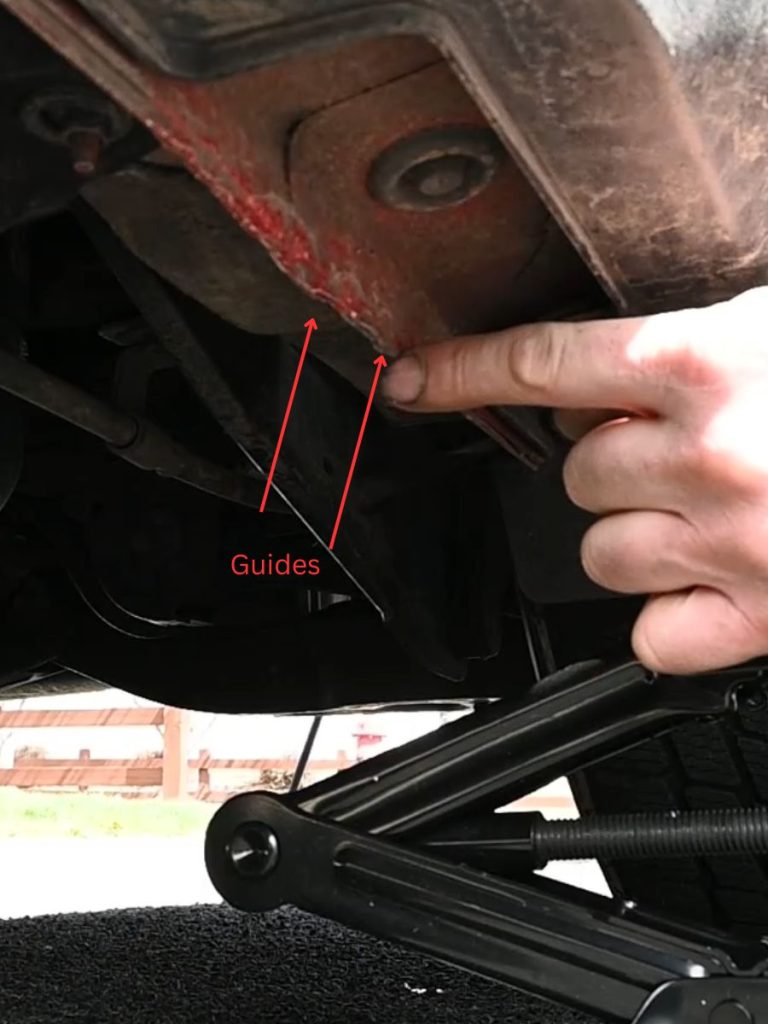
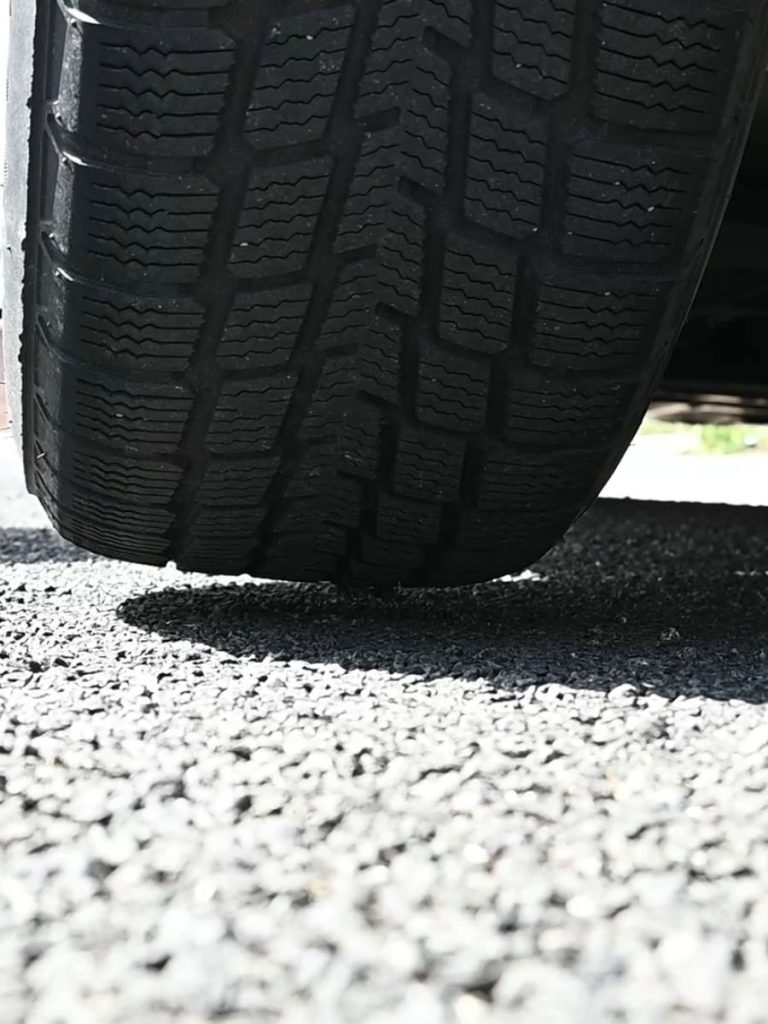
Once you have all of your lug nuts loosened, not removed, it’s time to place your jack under the vehicle. Place your jack along the frame of your vehicle, you will see two ridges or notches, place your jack in between these two ridges. Slowly start raising your jack until it meets the frame of your vehicle, adjusting the jack if necessary. Once you are certain the jack is centered on the frame of your vehicle, continue to raise the jack up until your tire is barely lifted off of the ground.
Remove the lug nuts
When your tire is barely off of the ground you are good to remove the lug nuts you loosened. Lifting the vehicle changes the way your wheel rests on the axle so you may not be able to turn the lug nuts by hand right away. Use your lug nut wrench to remove the lug nuts if needed.
Removing the bad tire
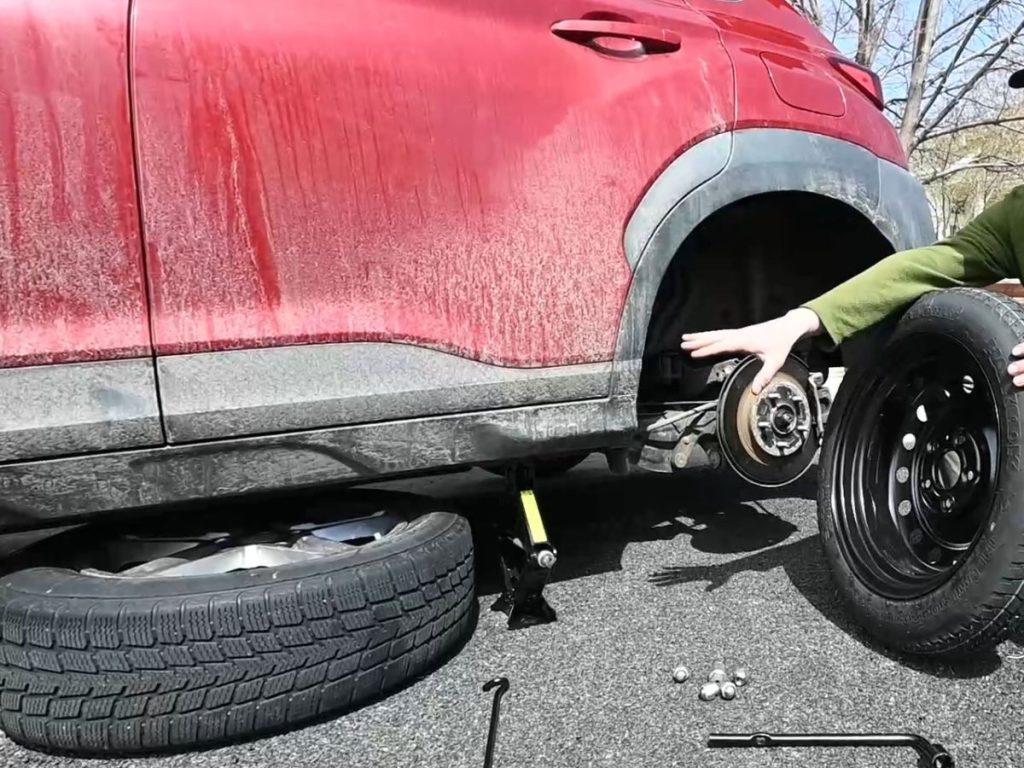
After the lug nuts are removed the tire can be removed. Place the flat tire under the frame of the vehicle while you work on putting the spare tire on. This is an added safety measure to keep the car from falling on you in the event your jack fails, while you are putting your spare tire on.
Put on the spare
Only lifting the tire barely off the ground make it easier to remove and replace the tire. After removing the flat tire, proceed with putting the spare tire on. Line up your 5 points with the studs and the center hub of the axle. As long as you have the center of the axle properly fitted in the center hub of the wheel you can proceed with putting your lug nuts back on. DO NOT use your lug nut wrench to put your lug nuts back onto the studs. Put your lug nuts on by hand to prevent you from cross threading your lug nuts.
Carefully and only slightly lower the vehicle
Once your lug nuts are finger right you can lower the vehicle down until the tire is barely touching the ground, do not lower the vehicle completely. After lowering your vehicle for the spare tire to start to touch the ground, you can proceed with tightening your lug nuts using the lug nut wrench.
While tightening your lug nuts, use the skip every other lug nut method. This method ensures the tire is secured evenly and mounted correctly. Use your lug nut wrench until you can not turn your lug nuts anymore. At this point give your lug nut wrench a good forceful turn to ensure you have tightened your lug nuts enough. Do not over tighten your lug nuts! If you have a torque wrench use it to torque your lug nuts to specs (this can be found in your owner’s manual). Otherwise make sure you get to a mechanic or tire shop as soon as possible to get your tire replaced and check the torques on your tires.
After you have successfully changed out your tire make sure you put all of your tools back where you found them! This will save you a lot of time and frustration, if you ever need to use them again.
Have you ever needed to change out a flat? Were you prepared when the time struck? I’d love to hear your experiences!
Thank-you for making this so easy to follow!! My mom taught me when I learned to drive, but honestly I’ve forgotten most of it when I didn’t have to do it. Super helpful and practical!!
Hi Trina,
Thanks for the feedback and I am glad I could help!
-Bree